 20
20Feb
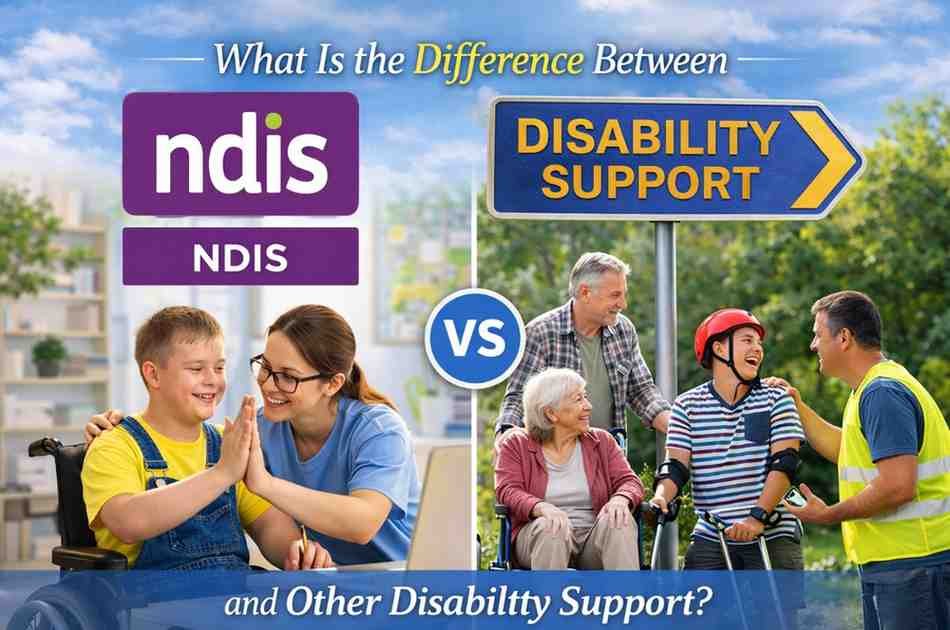
Understanding disability support options in Australia can feel overwhelming. Many families and individuals often ask: What is the difference between NDIS and other disability support services?
While both aim to improve quality of life, the structure, funding, eligibility, and level of personalisation can differ significantly.
In this guide, we break down the key differences to help you make informed decisions about the right support pathway for you or your loved one.
What Is the NDIS?
The National Disability Insurance Scheme (NDIS) is a government-funded program in Australia that provides financial support to eligible individuals living with permanent and significant disabilities.
It is designed to:
- Provide funding directly to participants
- Support long-term goals
- Promote independence and community participation
- Offer personalised funding plans
The NDIS gives participants greater choice and control over the services and providers they use.
What Are Other Disability Support Services?
Other disability support services may include:
- State-funded community programs
- Private disability care providers
- Non-profit organisations
- Short-term or crisis support services
- Medicare-funded allied health services
Unlike the NDIS, these supports may not provide individualised funding packages. Instead, they may offer generalised services based on availability, eligibility criteria, or limited funding pools.
Key Differences Between NDIS and Other Disability Support
1. Funding Structure
NDIS: Participants receive an individual funding plan based on their specific needs and goals. The funding is portable, meaning participants can choose their own providers.
Other Support Services: Funding is typically provided directly to the organisation rather than the individual. Services may be limited by budget, availability, or location.
2. Choice and Control
One of the biggest advantages of the NDIS is flexibility.
Under the NDIS, participants can:
- Choose their preferred service providers
- Change providers if needed
- Tailor services to their goals
- Self-manage or use plan managers
Other disability services may have restricted provider options and less flexibility in customising support.
3. Long-Term Planning
The NDIS focuses on long-term outcomes such as:
- Building independence
- Developing life skills
- Gaining employment
- Increasing community participation
Other support programs may focus on short-term assistance rather than structured goal-based development.
4. Eligibility Criteria
To access the NDIS, individuals must:
- Be under 65 years old
- Be an Australian citizen, permanent resident, or hold a Protected Special Category Visa
- Have a permanent and significant disability
Other support services may have different eligibility requirements, and some may not require formal disability assessment documentation.
5. Level of Personalisation
NDIS plans are highly personalised, based on individual assessments and goals.
In contrast, other services may provide standardised programs that are less tailored to personal development outcomes.
This is where choosing the right provider becomes crucial.
How Bridging Care Solutions Supports NDIS Participants?
At Bridging Care Solutions, we work closely with NDIS participants to deliver compassionate, personalised support aligned with individual plans and goals.
Our services focus on:
- Promoting independence
- Supporting daily living
- Building confidence
- Encouraging community inclusion
- Strengthening life skills
Whether you are newly approved under the NDIS or exploring your options, our experienced team ensures your support plan is delivered with care and professionalism.
Learn more about our services by visiting our Home Page.
Can You Access Support Without NDIS?
Yes, some individuals may still access disability services outside the NDIS system through:
- Community programs
- Private funding
- Health services
- Local council initiatives
However, the scope and funding level may differ significantly compared to NDIS-supported services.
If you’re unsure which pathway is right for you, speaking with a trusted provider can help clarify your options.
Which Option Is Right for You?
Choosing between NDIS and other disability support depends on:
- Your eligibility
- Your long-term goals
- The level of flexibility you require
- Funding availability
- The type of support needed
For individuals with permanent disabilities seeking structured, goal-focused, and flexible care, the NDIS often provides broader opportunities for growth and independence.
Get Expert Guidance Today
Navigating disability support systems can be complex — but you don’t have to do it alone. If you would like personalised guidance or want to understand how NDIS funding can support you or your loved one, reach out to the caring team at Bridging Care Solutions.
Visit our Contact Page to speak with us today.
Together, we can help you access the right support and build a stronger, more independent future.